
You want a phone that stops asking for your attention, and ideally one that looks calm while it does it. So you search for a minimalist dumb phone, and you get a list where a $20 flip phone, an $899 pre-order and an Android handset with Google services all wear the same word.
Here is the short answer: “minimalist” is a marketing word, not a specification, and the price on the page is often not the price you pay. Three things actually separate these phones: how hard it is to get Instagram back, what the phone costs over three years and what happens when you stop paying for it, and what happens if you hate it in week two.
The second one holds two surprises. The $399 Wisephone II costs $977.64 over 36 months before you pay a carrier, which is more than the $899 Light Phone III. And if you stop paying its software fee, Techless’s terms, dated 26 October 2026, say the phone can drop into a restricted mode, and after 90 days unpaid can be wiped back to a plain Android phone, your data with it. The third matters just as much, because Light does not take a phone back if you simply change your mind.
For most people the pick is the Mudita Kompakt, with one software caveat that the buying guides we read leave out. If you want none of your apps back, buy a Light phone. If you are not sure you need any of this, the last section is for you.
Every price below was checked on 9 November 2026 on the maker’s own pages, before tax and shipping, unless another source is named.
“Minimalist” covers three different products
The word has no definition. In the video “Dumb Phones Are Dumb.”, the YouTuber Brandon stops to explain that the phones are sorted “based on how they are marketed to the consumer,” which is the only reason the far smarter Minimal Phone 2 sits next to the Light Phone in it.
The creator of the channel That Practical Mom has lived more than a year without a smartphone and draws the line more usefully. “Some of them are essentially smartphones, but they’re just like not as flashy, so you can still download all of the apps,” the video says of minimal phones. The verdict that follows: “For me, this is not what I wanted.”
Here is how blurred the line has become. Light’s Light Phone III page lists a 3.92-inch AMOLED screen at 1080 by 1240 pixels. Minimal Company’s Minimal Phone 2 page lists a 4-inch AMOLED at 1080 by 1240. On paper the two screens are nearly the same. One phone ships with no browser and the other ships with Google services. The difference between a dumb phone and a smartphone here is almost entirely a software decision, and software decisions can be changed by the company that made them.
So sort the market by where the limit lives:
- Locked. The maker decides what runs, and overruling it takes a developer workaround at best. Light Phone III, Light Flip, Wisephone II, Sunbeam F1 Pro, dumbphone 2.
- Fenced. Nothing distracting out of the box, and a gate you can open with a computer and some effort. Mudita Kompakt.
- Styled. A smartphone with a calm home screen. Minimal Phone 2, Punkt MC03.
Any of the three can be the right purchase. The expensive mistake is buying the third kind when you wanted the first.
How far away is Instagram?
This is the question that predicts whether a phone will change your habits.
| Phone | What stands between you and Instagram |
|---|---|
| Light Phone III, Light Flip | Light itself. The only gap is developer sideloading on the III, which may not work |
| Wisephone II | Techless, which curates the app list and can change it |
| Sunbeam F1 Pro | No browser to open it with |
| dumbphone 2 | dumb.co, which picks the features |
| Mudita Kompakt | A cable, a desktop app and an E Ink screen |
| Minimal Phone 2 | Very little: it ships with Google services |
Light’s Wi-Fi support article says “there is no way to browse the internet on the Light Phones.” Light’s developer site keeps social media, internet browsers, news, email and “other infinite feeds” out of its Tool Library. The same site says Developer Mode lets you side-load “whatever APK you’d like,” but warns that apps not built with its SDK “may not work well (or at all).”
The Wisephone is closed in a different way: someone else holds the key. Techless’s product page lists vetted third-party apps, including Bank of America and Venmo, and adds that “we reserve the right to add or remove third-party apps at any time.” That cuts both ways. Your bank might arrive next month, or the app you bought the phone for might leave.
The Sunbeam is closed in the most literal way. Danny Gonzalez tested a Sunbeam phone for a video at 4.4 million views when checked, and found its QR scanner can only copy a link: “It doesn’t even have an internet, so how could it go to a QR code?”
The Kompakt is the interesting case. Mudita’s product page says it “does not include an app store,” yet you can sideload Android apps with its Mudita Center desktop app. Reagan Rose of Redeeming Productivity, who received one for free and shares a discount code but says the video is not sponsored, installed the Aurora Store, which “sort of just mirrors Google Play,” and added Kindle, Libby, Audible and a podcast app the same way.
What stops you at that point is the screen. “Trying to watch a video on this is going to make you want to gouge your eyes out,” Rose says. Rose’s argument is that a minimal home screen on an iPhone, deleted apps or a blocking gadget all “still ultimately rely on your self-discipline.” That is the honest case for E Ink: the limit is in the hardware, so you cannot talk it out of its decision at 11pm.
It is also the argument the Minimal Phone 2 gives up. Minimal Company’s product page says the screen is AMOLED, not E Ink, and that the phone “will ship with Google services by default.” It may be a lovely small keyboard phone. As dumb phones with keyboards argues, it is not a dumb phone.
What they really cost over three years
Add up 36 months and the ranking changes. The table covers the phone and any fee the maker requires, not your carrier, because only one of these phones includes service.
| Phone | Pay today | Required fee | 36-month cost | Service included |
|---|---|---|---|---|
| Light Flip | $349 | None | $349 | No |
| Sunbeam F1 Pro | $359 to $389 | None | $359 to $389 | No |
| Mudita Kompakt | $399 | None | $399 | No |
| dumbphone 2 | $20 | Plan from $15.99 a month | $595.64 | Yes |
| Minimal Phone 2 (256GB) | $599 | None | $599 | No |
| Light Phone III | $899 | None | $899 | No |
| Wisephone II | $438 | $14.99 a month | $977.64 | No |
The totals are our arithmetic from each maker’s published prices. Three notes keep them fair.
The Wisephone fee is rent on the software. Techless says on its product page that “Wisephone requires a WiseOS subscription,” and $438 is the $399 phone plus a $39 activation fee. The plans page lists the standalone WiseOS subscription at $14.99 a month or $164.88 a year; paying annually brings the three-year figure to $932.64, still more than the Light Phone III. Techless’s own 1GB carrier plan at $24.99 a month includes WiseOS and replaces both bills, for $1,337.64 all in over three years.
The dumbphone 2 fee is your phone bill, and you cannot take it elsewhere. The $20 buys what dumb.co’s FAQ calls “a TCL flip 2 with our custom dumbOS software,” and the same FAQ says “alternate SIM cards and phone plans are not supported.” Plans run $15.99, $20.99 and $25.99 a month on T-Mobile’s network, with unlimited calls and texts and 1GB of data, so $595.64 is the floor and the top plan comes to $955.64. Since every other phone here needs a carrier on top, the fair comparison is simple: against the $399 Kompakt, the dumbphone 2 on its cheapest plan wins if your carrier would cost you more than $5.46 a month. On the top plan, that line moves to $15.46. It works in 49 US states, excluding Alaska, plus Puerto Rico. Jose Briones, whose channel reviews dumb phones, calls the plan lock a “bummer” while still recommending the phone to anyone happy with the basics.
Light’s monthly offer is a two-year contract. Light’s FAQ sells the Light Phone III “starting at $59/month with a two-year Light Service plan contract,” which is $1,416 over 24 months. Buying it outright and paying for Light Service from $25 a month comes to $1,499 over the same period, so the contract saves $83 if you wanted Light’s service anyway. Light Service is optional, and its plans page says it is currently limited to the United States and Canada.
What happens when you stop paying
This is the question nobody asks at checkout, and it is the one that decides what you actually own.
The Light phones, the Kompakt, the Sunbeam and the Minimal Phone 2 have no required fee. Stop paying your carrier and they keep working as phones on another SIM. Sunbeam sells an optional Premium subscription at $3.50 a month or $40 a year for voice-to-text and extended weather and navigation, and the phone does not depend on it.
The two phones with a required fee behave very differently when the money stops.
The Wisephone II locks first and can erase later. Techless’s Management Services Terms, dated 26 October 2026, say that if the subscription lapses, “the device may enter a restricted Setup mode.” In that mode most of the phone is unavailable and “only limited functionality, including emergency calling and text messaging where supported, will remain available.” If the phone then stays without a subscription for 90 consecutive days, Techless may unenroll it. The terms describe what that means: a factory reset to “a standard Android operating environment, which permanently removes WiseOS and erases all data stored on the device.” Backing up first is your job.
Read that again from the buyer’s side. The product page lists the hardware as a Samsung A17 5G. Stop paying for three months and the minimalist phone you bought becomes a regular Android phone with an empty memory, which is exactly the device you were paying to get away from. If you are buying a Wisephone for someone else, a teenager or a parent, this is the clause to understand before the card on the account expires.
The dumbphone 2 has nowhere else to go. Since dumb.co does not support other SIMs or plans, its phone has no route onto a network except dumb.co’s own plan. There is a 4-month minimum once you activate, and the FAQ says cancelling early does not stop billing until that period ends. At $20 the hardware is cheap enough that this matters less, but the phone is only as good as the plan behind it.
None of this makes either phone a bad buy. It makes them services, and a service should be priced and judged like one.
What it costs to change your mind
Many people buying one of these are running an experiment, and experiments fail. The buying guides we read do not mention returns at all, and this is where the phones differ most.
| Phone | Return window | The catch |
|---|---|---|
| Light Phone III, Light Flip | None for a change of mind | Defects only. Orders cancelled before shipping are refunded in full |
| Wisephone II | 14 days | $55 restocking fee once unsealed, $25 if still sealed |
| Sunbeam F1 Pro | 30 days | $30 restocking fee |
| Mudita Kompakt | 14 days, 30 during its current promotion | You pay return shipping |
| dumbphone 2 | No standard window; full refunds only in special cases | 4-month plan minimum, so at least $83.96 with the phone |
| Minimal Phone 2 | Full refund if you cancel before it ships | After shipping, its return process applies |
Light’s FAQ is blunt: “As a super small company, we can only currently take returns for manufacturer defects. This means that we can not accept returns for simply being disappointed in the product or no longer interested.” Its returns article gives defective phones up to a year. So the most expensive phone here is one you cannot send back because it did not suit you. Resale is your exit.
Light’s phones are also picky about networks. Its carrier notes say “we’re not compatible with most of the carriers that work off of the networks of the major carriers,” the resellers often called MVNOs. Since you cannot return it for not working on your plan either, run Light’s compatibility checker before you order, not after.
Wisephone’s refund policy treats any unsealed or used phone as an opened-box return, and adds that “monthly plans are non-refundable once billed.” Sunbeam’s return policy deducts the $30 fee but covers the return label on qualifying refunds. Mudita’s return process gives 14 days from delivery, extended to 30 for orders placed from 15 October 2026 while the promotion lasts, with no end date given.
The Kompakt question the lists skip: Android 12
Mudita’s product page promises “5 years of software and security updates” and a 2-year warranty, and its serviceability page says batteries and displays “will be available for a minimum of seven years.” Rose’s video quotes a different promise, three years of software support from the date the last phone is made. Go by Mudita’s page, and ask when the five years start, because the page does not say.
The part the lists we read leave out is what those updates are built on. The Kompakt’s system started from Android 12, and Google has stopped publishing patches for that version. “The last Android 12 fixes were part of the March 2025 security bulletin,” says a November 2025 post on Mudita’s forum, written on the company’s behalf. “Any long-term support for a device on an Android 12 base must come from the system vendor,” it continues, and here that vendor is Mudita. The post explains the process: check each new bulletin, see whether the affected code still exists in Mudita’s system, and bring in and test the fix if it does. It is plain about the limit: “We will not backport every single issue from all future bulletins.” High-risk problems, it says, will be fixed “for as long as we support the device.”
Mudita’s case is reasonable. A July 2026 forum post argues that “the Android version number alone does not really describe the security status of the device,” and says “We take full responsibility for the security of Mudita Kompakt and Mudita OS K.” The MuditaOS K 1.6 release in August 2026 “includes new security patches.” We have not audited any of this.
What it means for you is simple. Calls, texts, books and offline maps carry little risk from this. If your plan is to sideload a bank app or an authenticator, you are trusting a small team to do work Google has stopped doing, on a device meant to last years. Decide with that in view.
The phones, briefly
Light Phone III
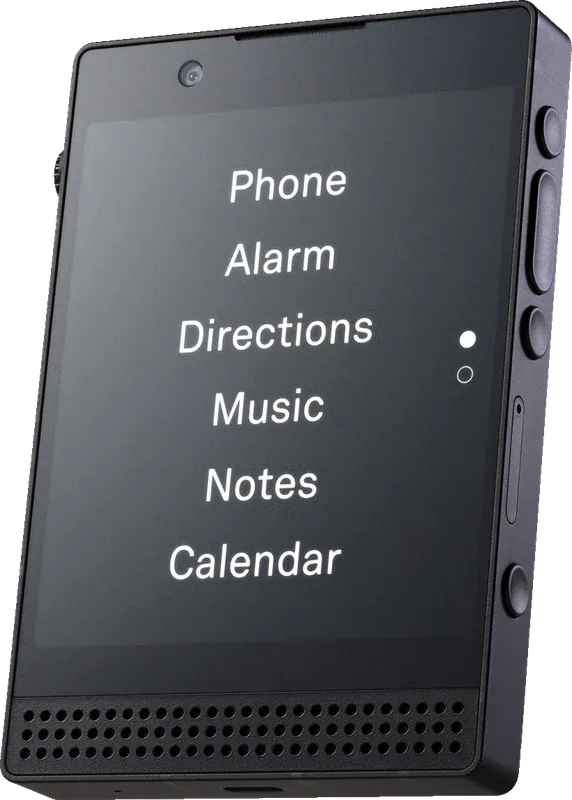
The Light Phone III. Image: Light.
$899 unlocked, up from the $799 list price at launch, and it is a pre-order: Light’s shop page says a new order “is expected to deliver in late December 2026.” Its optional tools now include rideshare with Lyft and Uber, a two-factor authenticator, directions, and a music and podcast player; payments are not available yet. In a September 2026 roundup, Briones blames the price on memory costs, calling the situation “personally out of control,” and still names it and the Kompakt the best of the premium options.
The creator of That Practical Mom, who owns one, is the better reality check: “you don’t need to pay for this phone to get the same benefit.” The video points to the Light Phone II, which “has way less features,” as the cheaper way to the same place, and calls the III a phone with “more features than I really wanted.” Light’s FAQ lists the Light Phone II at $299, but Light’s shop showed it sold out when we checked.
Light Flip
Light’s newest phone is a flip phone with T9 typing and a 2.8-inch OLED screen. Light’s FAQ prices it at $349 unlocked, or from $39 a month on a two-year contract, and its product page expects the first batch to ship in April 2027. Light’s spec sheet lists an 1,800 mAh battery, the same figure Light gives for the Light Phone III, and the product page estimates “approximately ~1.5 days” of battery life, which is short for a phone with this little to do. Nobody has one yet, so nobody can tell you how it holds up over months.
Mudita Kompakt
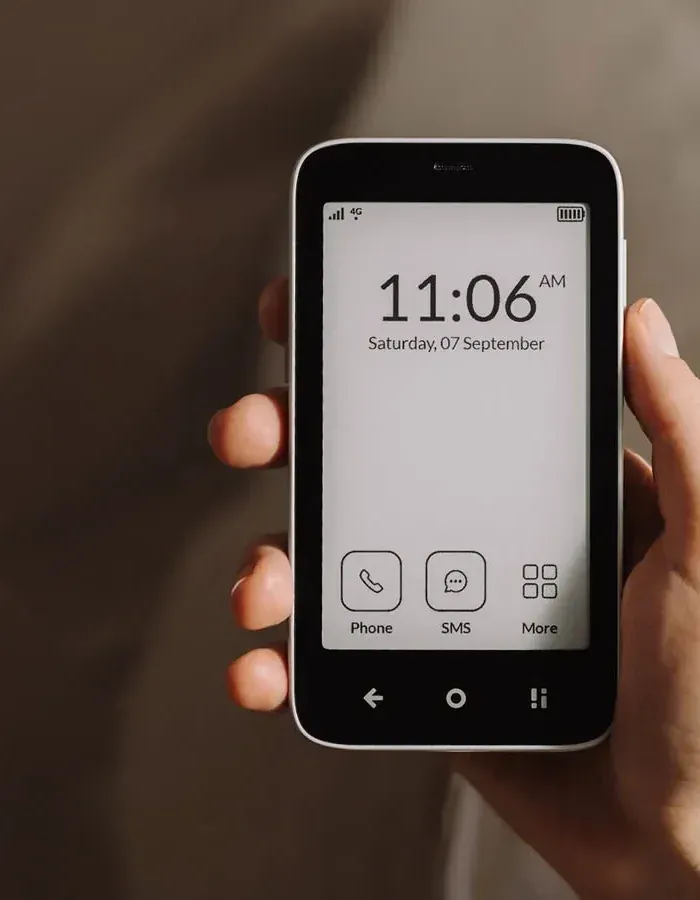
The Mudita Kompakt. Image: Mudita.
$399 on Mudita’s store, in a Global version and a North America version that the store picks from your shipping country. The 4.3-inch E Ink screen is the point, and Mudita claims “up to 6 days of battery life.” Seve of Sunny Kind Journey, in a one-year video sponsored by Mudita, reports “around three days” with heavier use and “close to the full week” in lighter weeks. The same video names the limits: the camera will not replace a phone camera, and the missing front camera was “much harder” for Seve, who has family abroad and could not make normal video calls.
Mudita warns that sideloaded apps may not work consistently, especially ones that need Google services. Rose says most did, but that some need a workaround with which “you give up some of the privacy benefits.” Rose also found the default maps app “was not great at finding places” in an unfamiliar city, and kept iMessage by sideloading BlueBubbles, a project that, per its install guide, needs a Mac running its server app. Even after calling the Kompakt possibly “the best minimalist phone on the market,” Rose is undecided, and for now leaning toward staying with the Apple Watch Rose has relied on for two years.
Wisephone II
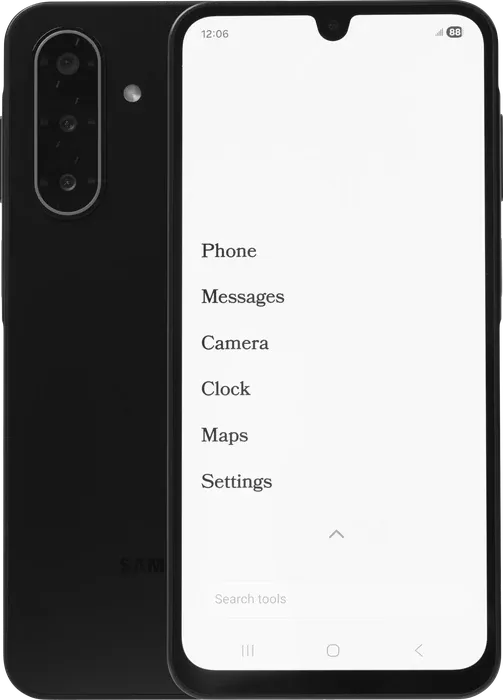
The Wisephone II. Image: Techless.
The case for it is the app list: Techless carries approved apps such as banking and payments, and keeps everything else out. The price of that is the subscription above, the 90-day clause, and the fact that the list is theirs to change. Our guide to Android dumb phones covers what it runs on and why that matters for banking apps.
Sunbeam F1 Pro
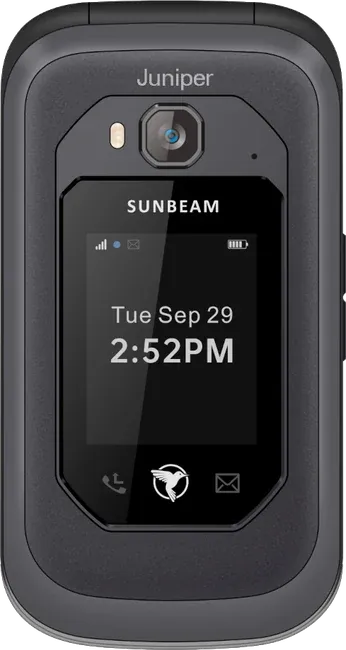
The Sunbeam F1 Pro, here in the Juniper configuration. Image: Sunbeam Wireless.
$359 to $389 depending on configuration, sold without service, and Sunbeam says every Pro phone bought after 1 July 2026 comes with a 2-year warranty. The configurations are the clever part: they differ by what is left out, from talk only to Waze, email and hotspot. Waze is the headline feature, which dumb phones with GPS compares. Unlike the Wisephone’s, the only subscription here is optional.
dumbphone 2
The cheapest way in, and the phone this niche has been arguing about. BGR reports that it made TIME’s list of the Best Inventions of 2026. It is a TCL Flip 2 with dumb.co’s software, and Briones lists rideshare and Spotify among its extra features. Everything above about the plan lock applies.
Minimal Phone 2 and Punkt
The Minimal Phone 2 is $599 for 256GB and $699 for 512GB at its pre-order price, which Minimal Company calls $100 off retail, and its FAQ says pre-orders “are scheduled to ship in December 2026.” Minimal Company plans “an official de-Googled Minimal OS ROM that owners can flash themselves,” but every unit arrives with Google services, and the FAQ warns against ordering on the assumption that a promised ROM is already available.
Punkt’s MP02, the phone many lists still recommend, showed sold out at $299 in Punkt’s own store when we checked. The MC03 is a privacy smartphone at $699, not yet sold in the US, and its product page promises “no recurring subscription fees” while labelling its photos “2 years of AphyOS Subscription.” Ask Punkt in writing before you buy.
The second-phone trap
Some long-term users of these phones did not throw the smartphone away. Seve kept one for online banking, two-step verification, workouts and travel tickets, and says “The biggest one was simply managing two devices”: two phones to charge, remember and update, and when plans would change, “it often felt easier to bring both just in case.” Some carriers let one number ring on two devices, and Seve’s charges “around 10 euros per month” for it, which Seve decided was not worth paying. That is 360 euros over three years, and it belongs in the sums above if it applies to you.
Brandon makes the same objection from the other side: “In an effort to have a simpler experience, I’d end up complicating my daily carry.” If your plan involves a drawer phone, price the drawer phone.
What you will actually miss
The year That Practical Mom spent without a smartphone is the most useful evidence here, because the video goes looking for the walls. The list of real problems was short, and most had a human answer:
- A school sign-in app that requires your location. The office agreed to sign the children in.
- App-only two-factor at a job. A USB security key, set up through the employer’s tech team.
- Concert tickets that cannot be printed. A call to the box office, then will call at the venue.
- QR-only waivers and menus. At a trampoline park, asking a person solved it.
- A robot vacuum with no web app. They stopped using it, and the video says vacuuming by hand turned out to take a couple of minutes.
“The truth is when you try to find a list of things that are actually impossible to do without a smartphone, the list is really pretty short,” the video concludes, while naming Uber, some electric car chargers and app-only e-bike rentals as real gaps. One more detail from the same video is worth knowing before you pay for maps: after more than a year with a minimal phone, its GPS function was used “approximately zero times.”
Parking is the one that bites. Gonzalez found a lot whose sign said to “pay via Passport app,” with no phone number on it. The YouTuber behind the channel Shameless Nerd, who has had a dumb phone for years, told Gonzalez about calling the number on a similar sign, being told to download the app, and running about a mile down a beach to borrow a phone. Gonzalez also met an airport restaurant with QR-only ordering and no paper menu. If your town runs on apps like these, find out how you will handle them before you commit.
The uncomfortable part: you may not need to buy anything
Briones has been in the dumb phone community for seven years, and the channel’s October 2026 video is still called “Is Digital Minimalism a Cash Grab?” The answer: “There is no amount of money that you can pay to solve your screen time issue.” Seve, in a video paid for by a phone maker, still warns against buying one just because it looks more minimalist, because then “it can easily become consumerism from the other side.” Gonzalez asks it too: “is another technology company really the solution?”
Brandon’s alternative costs nothing. Sort everything on your phone into “tool and distraction,” delete the distractions, and set focus modes that silence work contacts after hours and let only close friends and family through. That works until it does not. Gonzalez keeps social media apps on an iPad instead of the phone, and still reaches YouTube in Safari, past a screen time limit of zero minutes, because the limit comes with a button to go on YouTube anyway.
That gives you a free test. Strip your current phone for 30 days using dumb phone apps, or Apple’s Assistive Access on an iPhone. If you stay out, you just saved $350 to $900. If you keep walking back through the door, you have learned that you need a door you cannot open, and the money is justified.
Before you pay
- Run the carrier check. Light’s compatibility checker, and the right version of the Kompakt for your country.
- Multiply any fee by 36. Then add your carrier, unless service is included.
- Ask what happens when you stop paying. On the Wisephone, the answer is restricted mode and, after 90 days, a possible wipe.
- Read the return policy of the store you are buying from. On Light, assume there is none.
- List the apps you cannot lose. Check them against the Wisephone’s list, or expect to sideload on the Kompakt and accept that some may fail.
- Find your parking, ticket and work-login problems now. They are easier to solve before you switch.
- Run the 30-day test. It is free.
Which to pick
- You want a good balance and read a lot. Mudita Kompakt. E Ink does the policing, and $399 with no fee is the best value here. Think twice before putting a bank app on it.
- You want almost no way back, whatever it costs. Light Phone III, knowing you cannot return it and a new order arrives in late December.
- You want almost no way back and can wait. Light Flip at $349, first batch in April 2027, once real reviews exist.
- You are in the US and want the lowest all-in cost. dumbphone 2, if its plan lock and T-Mobile coverage suit you.
- You want a tough flip phone you own outright. Sunbeam F1 Pro.
- You need banking and payments with a hard limit on everything else. Wisephone II, if your bank is on the list and you accept renting the software, including what happens if you stop.
- You want a beautiful small keyboard phone. Minimal Phone 2, and be honest with yourself that it is a smartphone.
- You are not sure. Buy nothing for 30 days.
Whichever you choose, the rest of the switch is in the complete dumb phone playbook. If a family group chat is the real obstacle, read dumb phones with WhatsApp first. And if you need to keep a laptop online, dumb phones with a hotspot shows which of these can do it.
Sources: all prices and terms checked on 9 November 2026. Light’s Light Phone III shop page, Light Phone III page, FAQ, plans, Light Flip page, Light Flip specs, developer site, returns article, Wi-Fi article, carrier notes and compatibility checker; Mudita’s Kompakt page, store, serviceability page, return process, MuditaOS K 1.6 release and forum posts from November 2025 and July 2026; Techless’s Wisephone II page, plans, Management Services Terms and refund policy; Sunbeam Wireless’s F1 Pro range, return policy and subscriptions; dumb.co’s shop and FAQ; Minimal Company; Punkt’s MP02 page and MC03 page; BlueBubbles install guide; BGR on TIME’s Best Inventions of 2026; Android Central on the Light Phone III. Videos, each checked against its transcript: That Practical Mom, “How I live without a smartphone in 2026”, Danny Gonzalez, “i switched to a flip phone to see if it ruins my life”, Redeeming Productivity, “A Minimal Phone to Help You Scroll Less and Read More”, Seve, Sunny Kind Journey, “I Used a Minimalist Phone for a Year (my honest thoughts)”, Brandon, “Dumb Phones Are Dumb.”, and Jose Briones, “Is Digital Minimalism a Cash Grab?” and “The Best Dumb Phones You Should Consider in 2026”.