

You want your teenager reachable and off the feed, without turning them into the kid nobody can text. So you search for a dumb phone for teens, and much of what comes back is written by companies that sell a kids’ phone or a monitoring app. Canopy’s guide, one of the most visible, recommends ten phones and then explains that “Our parental control app, Canopy, checks all these boxes.”
Here is the short answer: the phone matters less than the group chat. A teenager’s plans, jokes and invitations mostly travel through group texts, and that is the feature a basic phone is most likely to break and the one kids’ phone companies charge extra for. Three questions decide the purchase: will the phone keep your teen in the group chat, and at what price; what can you see and what can they get around; and what does it cost to leave, including on the day your teen turns 18.
The first question holds the surprises, and they are on the makers’ own pages. Troomi’s cheapest plan, at $24.95 a month, offers “calling and basic texting”; “group texts and picture and video messaging (MMS)” start with the $29.95 plan. Gabb’s Starter plan left out group and picture messaging, and Gabb now says “The Starter Plan is not available for new activations.” And Charity Mobile, a US carrier, says of the Nokia 2780 Flip, a phone that appears on many of these lists: “Group messaging is currently not supported on this device.” Neither Canopy’s guide nor Your Teen magazine’s guide to dumb phones, both of which come up for this search, mentions any of it.
Every price below was checked on 16 November 2026 on the maker’s own pages, before tax, unless another date is given.
What teens say about being without a phone
Pew Research Center asked 1,453 US teens aged 13 to 17 about this in autumn 2023, in a survey published in March 2024. 72% said they often or sometimes feel peaceful when they don’t have their smartphone, and 74% said happy. But 44% said anxious, 40% upset and 39% lonely. Both columns are true at once, and the lonely one is what a dumb phone has to answer for.
The same survey found that 38% of teens and 38% of parents at least sometimes argue about phone time, and that half of parents say they have looked through their teen’s phone. A basic phone ends most of the first argument. It does not end the loneliness on its own.
The creator of the YouTube channel zachy.mp4, born in 1996, lived the minority side of this. In a video about why they use a dumb phone today, they describe getting “a $30 prepaid flip phone from Walmart” in seventh grade, in 2008, and still having a basic LG phone as a high school senior in 2013, when “about 60% of my friends had a smartphone.” One day, five friends sat in their parents’ living room “silently tapping away”; the creator and two others left for a walk, and it ended in an argument when the rest noticed. “Times changed. I didn’t. I’ve become the weird one.”
In 2013, 40% of that creator’s friends still had basic phones. A teenager switching now may well be the only one, which is why the group chat is the first thing to test, not the last.
The group chat test
If your teen’s friends have iPhones, Apple’s own support page on group texts explains what happens when a basic phone joins their thread: “If any of the recipients aren’t using iMessage, then the message is sent as an MMS or SMS.”
Which of the two matters. Group MMS behaves like a group chat, with photos. Group SMS does not. Apple says group SMS messages “don’t support multimedia attachments, like photos or videos,” and “All responses in a group SMS are sent as individual text messages.” That is not a group conversation in any sense a teenager would recognise. The setting that decides it sits on the iPhones, not on your teen’s phone: “To send a group MMS message on an iPhone, turn on MMS Messaging,” Apple says, and if that option is missing, the carrier has to confirm that the plan supports it.
Then the basic phone has to do its part, and this is where the cheap end of the market is weakest:
- Some phones do not do it at all. Charity Mobile’s Nokia 2780 Flip listing says group messaging “is currently not supported on this device.”
- Some do it, eventually. The creator of zachy.mp4 uses a Sonim flip phone that “supposedly supports group messaging, but even then it still was wonky for like the first 5 months.” The fix came from one of Jose Briones’s videos, and the fallback was telling everyone “just call me.” That works for an adult. Ask whether it works for a 14-year-old whose weekend is planned in a thread.
- Some hide it in a setting. dumb.co’s FAQ tells dumbphone 2 owners to “make sure group messaging is turned on” in the messaging app’s settings.
- Some charge for it. On Troomi, group chats and photos are what the extra $5 a month buys. On Gabb, new customers now start on the Standard plan, which Gabb’s plans article says includes “group messaging” and “picture messaging.” Bark describes its $29 Starter plan with “Your child can call and text approved contacts. That’s it.” Its page does not say whether group texts work on it. Ask before you buy.
So run the test before the return window closes. Put your teen’s SIM in the phone, have them start a group with at least two friends on iPhones, and send a photo in both directions. If anything fails, find out whether the fault is the phone, the plan or a setting while you can still send the phone back.
One practical snag first: your teen’s line may live on an eSIM. Tom, whose three-minute how-to on switching to a flip phone had nearly 900,000 views when checked, puts it plainly: “especially if you have an eSIM, you’re going to need to switch it to a physical SIM.” The same video advises buying a newer 4G model that matches your carrier’s bands rather than a second-hand phone.
What you can see, and what they can get around
Parents usually want two things a plain flip phone does not give them: location, and a list of approved contacts. The kids’ phones are built around both, and the details matter.
Location. Gabb’s plans page lists GPS tracking, with a footnote that updates arrive “approximately every 15 minutes.” That is fine for “did she get to practice” and useless for “where is he right now.” Troomi’s plans page describes “real-time GPS location tracking” from its cheapest plan up, and Bark lists GPS tracking and contact approval on every Bark Phone plan. A plain flip phone has no app for you to install, so the carrier is the only route, and it may not cover it: Verizon’s help page for Verizon Family says the full set of features needs its companion app on the child’s iPhone, Android smartphone or Verizon tablet, and does not mention flip phones. Ask your carrier about the exact model before you rely on it.
The SIM card. The easiest way around a basic phone is another phone. The creator of zachy.mp4 keeps a smartphone for a few jobs a flip phone cannot do, such as an app-only gate at their apartment complex, and says “I need to put my SIM card in here” to use it. A teenager with an old phone in a drawer can do the same, and an old phone on home Wi-Fi does not need a SIM at all. Before you spend money on the lock, decide what happens to the old phone.
Developer modes. When we checked Light’s developer site on 9 November 2026, it said Developer Mode lets Light Phone owners side-load “whatever APK you’d like,” while warning that apps not built for the phone “may not work well (or at all).” A curious 15-year-old will find that page. If the reason you are buying a Light phone is that nothing can be added to it, ask Light whether Developer Mode can be locked.
Who holds the keys. The kids’ phones and the Wisephone put the controls in a parent’s account. Techless’s terms, dated 26 October 2026, require the parent or guardian who subscribes to its monitoring service to be “18 years or older,” and say Techless does not recommend giving children under 18 administrative access to its parental controls.
If your teen already has an iPhone, Apple’s Assistive Access is a free way to try the idea first. Our guide to turning an iPhone into a dumb phone covers how it works and its emergency-calling caveats.
What it costs over two years
Two years, because that is the contract Gabb’s lowest prices assume. The table covers the phone plus any fee the maker requires. Some of these include phone service and some need a carrier on top, so read the last column.
| Phone and plan | Pay today | Monthly | 24-month cost | Group texts and photos | Service included |
|---|---|---|---|---|---|
| dumbphone 2, cheapest plan | $20 | $15.99 | $403.76 | Yes, once switched on | Yes |
| Troomi, Do | None listed | $24.95 + $6.94 phone | $765.36 | No | Yes |
| Wisephone II | $438 | $14.99 | $797.76 | Not checked | No |
| Troomi, Dream | None listed | $29.95 + $6.94 phone | $885.36 | Yes | Yes |
| Light Phone III | $899 | None | $899 | Not checked | No |
| Gabb Phone 4, Standard, 2-year | $249.99 | $29.99 | $969.75 | Yes | Yes |
| Bark Phone, Starter | $360 | $29 | $1,056 | Not stated | Yes |
The totals are our arithmetic from each maker’s published prices. Four notes keep them fair.
Gabb was on sale. Gabb’s plans page listed the Gabb Phone 4 at $249.99, on sale for $229.99, which brings the two-year total to $949.75. Without a contract, the Standard plan is $34.99 a month. On a family account with two to five lines, lines two to five pay the lowest monthly rate for their plan.
Troomi’s phone payments run for 36 months, not 24. The $6.94 a month is “For 36 months,” so after two years $83.28 of the phone is still owed.
The Wisephone and Light figures are from 9 November 2026, when we checked them for our comparison of minimalist dumb phones: $399 plus a $39 activation fee and a required $14.99 a month for WiseOS, and $899 for the Light Phone III, which Light then expected to deliver in late December 2026. Both need a carrier on top.
Pinwheel does not fit the table, because its pricing page showed no phone prices when we checked. Its parental controls alone, which it calls the Caregiver Portal, cost $17.99 a month or $174.99 a year with “Your choice of cellular provider.” With its own service, Pinwheel Wireless, it is $29.99 a month or $284.99 a year.
The dumbphone 2 is the cheapest by a distance, and the top of dumb.co’s three plans is $25.99 a month, $643.76 over two years. It runs on T-Mobile’s network with unlimited calls and texts and 1 GB of data.
What it costs to leave
A phone for a 13-year-old is a five-year decision, and at some point the controls have to come off. This is where the products differ most.
Gabb: a contract, a fee and a phone built for its network. Gabb’s product page puts the early termination fee at $150 on a two-year term, declining through month 24, and $100 on a one-year term, dropping by $10 a month from month 3. If you buy the phone in monthly payments, Gabb’s terms say “Until you have made all 24 payments, Gabb Wireless retains ownership of the device(s),” and “Cancellation of Service Plan will require immediate payment of any and all outstanding balances of device(s).” The same terms warn that “Devices purchased for use on our network may not function on other networks.” When a contract ends, Gabb’s plans article says service moves to month-to-month at the no-contract rate.
Troomi: the phone balance comes due. Troomi’s device payment FAQ, modified on 8 October 2026, answers “What happens if I deactivate my line before the 36 months are up?” with: “You would pay the remaining balance for the device upon deactivation.”
Bark: the way out is a normal smartphone. Bark’s Bark Phone page says “If you cancel more than 60 days after purchase, the phone is yours to keep,” and “If you’d like to remove Bark’s software and use the phone like a regular Android, you can do that anytime.” The phone is “a Samsung A16.” Say the uncomfortable part out loud: what keeps a Bark Phone a basic phone is a subscription and some software, not the hardware. For a 17-year-old that may be exactly the plan, because the phone becomes their first unrestricted smartphone on the day you decide, without buying another one. For a 12-year-old, it means the lock is only as firm as the account behind it.
Wisephone: lapse, then a wipe. Techless’s terms say that if the WiseOS subscription lapses, the phone “may enter a restricted Setup mode” with “emergency calling and text messaging where supported” still available. After 90 consecutive days without a subscription, Techless may unenroll it, which “permanently removes WiseOS and erases all data stored on the device” and returns it to standard Android. If a card on the account expires and nobody notices for three months, your teen can end up with a wiped, unrestricted Android phone.
dumbphone 2: a short minimum, then nowhere else to go. dumb.co’s FAQ says “there is a 4-month minimum commitment” once you activate, and “alternate SIM cards and phone plans are not supported on the dumbphone.” At $20 the hardware is nearly free, but it only works on dumb.co’s plan.
Pinwheel: no contract. Its pricing page says “Affordable Plans. No contracts.”
Light: no change-of-mind returns. When we checked on 9 November, Light’s FAQ said it “can only currently take returns for manufacturer defects.” If your teen hates it in week two, resale is the exit.
The phones, briefly
Gabb Phone 4
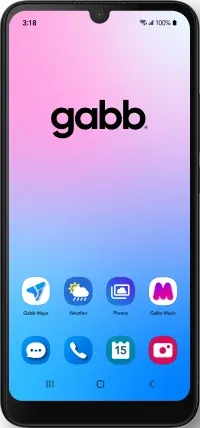
The Gabb Phone 4. Image: Gabb.
Gabb’s product page sums it up as “No internet. No social media.” It is a touchscreen phone, not a flip, with 16 preloaded apps and optional apps from Gabb’s curated library, according to its plans page. The appeal is in the details: an approved app library, family rates, and a music service. The trade is the contract, the slow location updates, and a phone that may not work anywhere else.
Bark Phone
A Samsung A16 at $360, or the Bark Phone Pro, a Samsung A37, at $600. Starter, at $29 a month, is “our most locked-down option.” The Advanced plans start at $39 a month for Wi-Fi only and run to $79 for unlimited data, throttled after 35GB, and every plan includes Bark’s monitoring for the whole family. It is a managed smartphone that can behave like a basic phone, and it is the most flexible option here as a teen gets older.
Troomi
A Samsung phone, the Galaxy A17 5G on its plans page, paid off at $6.94 a month over 36 months. Do is calls, basic texts and GPS; Dream adds group chats, photos and app controls; Discover adds a filtered browser, an app store and optional mobile data.
Pinwheel
Pinwheel sells three phones and its controls work with “any major carrier,” as its pricing page puts it, though not every phone works on every network: the Genesis 4 is “Compatible with T-Mobile and AT&T networks (not Verizon).” Pinwheel is the one to look at if you want to keep your current carrier and family plan.
dumbphone 2
The FAQ calls it “a TCL flip 2 with our custom dumbOS software,” for $20 plus a plan from $15.99 a month. Our minimalist phones comparison covers the plan lock and when it beats paying for a carrier separately.
Light Phone III
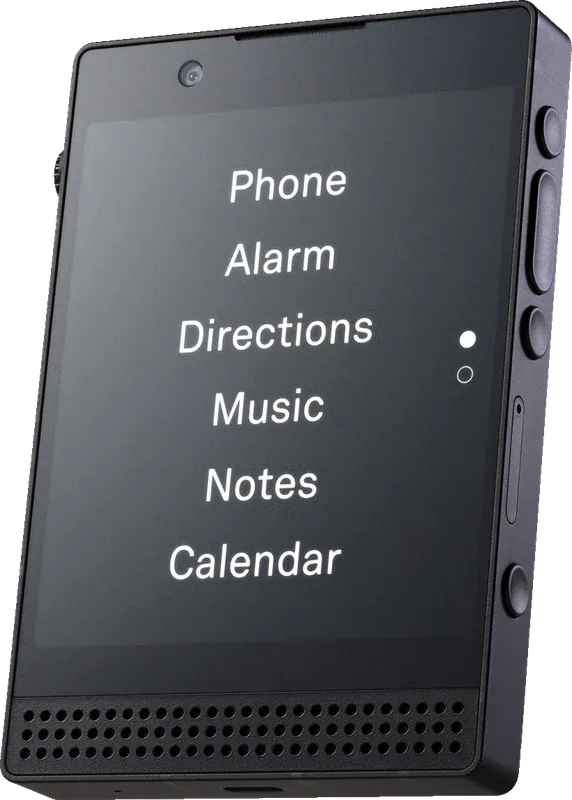
The Light Phone III. Image: Light.
The phone a teen who chose this for themselves tends to want. Light’s Wi-Fi article says “there is no way to browse the internet on the Light Phones.” At $899 it is the most expensive phone here, it cannot be returned for a change of mind, and Developer Mode is the question to ask. Light’s FAQ listed the Light Phone II at $299 on 9 November, but Light’s shop showed it sold out.
Wisephone II
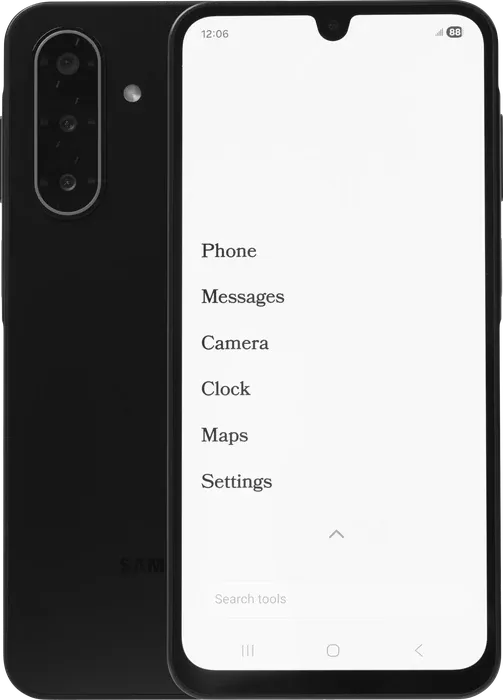
The Wisephone II. Image: Techless.
A Samsung A17 5G running Techless’s WiseOS, with an app list Techless curates. For a teen who needs a specific app, such as a bank, it can be the right compromise. Read the lapse clause above before the account’s card expires.
Nokia 2780 Flip
Cheap, durable and on every list. Charity Mobile, which sells it, says group messaging does not work on it and lists its mobile hotspot as “No.” It does run Google Maps without voice directions, as our guide to dumb phones with GPS explains. If your teen’s friends plan by group text, test it on your carrier before you count on it.
Before you buy
- Run the group chat test with two friends on iPhones and a photo in each direction, inside the return window.
- Check the plan, not just the phone, for group and picture messaging. On Troomi it is the $29.95 plan; on Bark’s Starter, ask.
- Decide what you need to see. If it is live location, Gabb’s 15-minute updates may not be enough, and a plain flip may give you nothing.
- Deal with the old smartphone before the new phone arrives, or the SIM will find its way back into it.
- Read the exit. Contract length, termination fee, who owns the phone until it is paid off, and what happens if a payment fails.
- Ask your teen. A phone a teenager agreed to is a different object from one they were handed.
Which to pick
- A first phone for a younger teen, and you want location and approved contacts: Gabb Phone 4 on the Standard plan. Group and picture messaging are included for new customers. Accept the contract and the 15-minute location updates.
- An older teen you plan to hand a normal phone at 18: Bark Phone on Starter, loosened as they grow. At the end, remove Bark’s software and it is a regular Samsung they already own.
- You want to keep your carrier and family plan: Pinwheel, after checking that the phone you pick works on your network.
- The lowest cost in the US: dumbphone 2, if T-Mobile covers you, with group messaging switched on and tested in the first week.
- A teen who asked for this themselves: Light Phone III, after asking Light about Developer Mode, or a plain flip that passes the group chat test.
- You are not sure yet: spend nothing. Lock down the phone they already have with Assistive Access for a month and see what breaks.
Whichever you choose, the switch itself is covered in the complete dumb phone playbook. If your family’s group chats live on WhatsApp rather than in text messages, read dumb phones with WhatsApp first, because that changes which phones can work at all.
Sources: prices and terms checked on 16 November 2026 unless noted. Apple’s support page on group texts; Pew Research Center, “How Teens and Parents Approach Screen Time”; Gabb’s plans page, plans and family rates article, Gabb Phone 4 page and terms; Bark’s Bark Phone page; Troomi’s plans page and device payment FAQ; Pinwheel’s pricing and phones pages; dumb.co’s shop and FAQ; Techless’s terms and Wisephone II page; Charity Mobile’s Nokia 2780 Flip listing; Verizon’s Verizon Family help page; Canopy’s guide to dumb phones for kids. Checked on 9 November 2026: Light’s Light Phone III page, Light Phone III shop page, FAQ, Wi-Fi article and developer site, and Techless’s plans. Videos, each checked against its transcript: zachy.mp4, “Why I Use a Dumb Phone and Never Want to Go Back to a Smartphone”, and Tom, “How to Actually Switch to a Flip Phone (Without Ruining your Life)”.